
Clay tile hanging
Clay tile hanging means fixing clay tiles to a wall instead of a roof, a finish that began in South East England in the late 17th century. Tudor’s handmade plain tiles, ornamental shapes and corner angles are all made for it, and they give character to a plain modern wall.
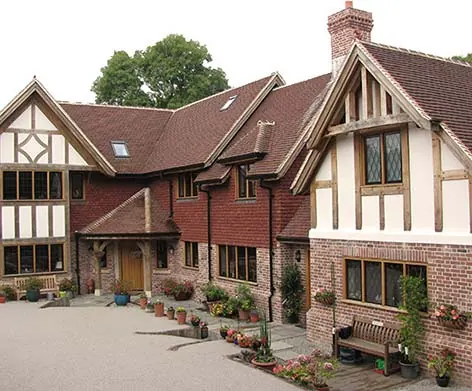
Where clay tile hanging came from
Tile hanging, also called tile cladding or vertical tiling, first appeared in the South East towards the end of the 17th century, to keep the weather off wattle-and-daub upper floors. Bricks were too heavy for timber-framed buildings, so tiles were a lighter and cheaper answer.
Today it carries the look of a roof down the walls, adds detail to dormers, window cheeks and the walls between bay windows, and covers irregular old walls while keeping the rain out.
Patterns and colours
Tiles can be hung in header or stretcher bond, mixed in two or three tones, or banded with ornamental tiles such as clubs, fishtails, bullnoses and arrowheads. Whole walls, or even whole buildings, can be wrapped in tiles for a bold modern look.
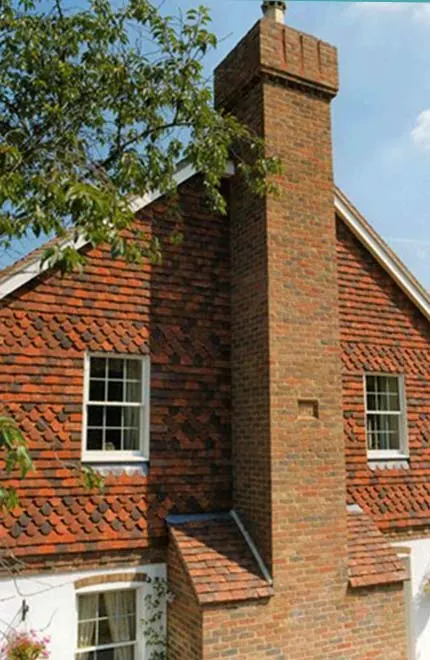
How clay tile hanging is fixed
The standard method is underlay against the wall, vertical counter battens at up to 600 mm centres, then horizontal tile battens. Every double-lapped plain tile hung on a wall must be nailed twice.
Corners use our external and internal angles, so the tiling turns a corner without cut edges. The Roof Tile Association publishes guidance on getting the best finish from clay tiles.
Questions about clay tile hanging
What is tile hanging?
Fixing roof tiles to a wall on battens, so the wall is covered in overlapping tiles. It is also called tile cladding or vertical tiling.
Do wall tiles need nailing?
Yes. Every double-lapped plain tile hung on a wall must be nailed twice.
Can I mix ornamental tiles into tile hanging?
Yes. Bands of clubs, fishtails, bullnoses or arrowheads are a traditional detail, and they are the same size as our plain tiles.
Which fittings do I need for corners?
External angles for outside corners and internal angles for inside corners, both made to match.
Where to go next
 Ornamental tilesClub, fishtail, bullnose and four more shaped tails for decorative bands.
 Plain tile fittingsEave and top tiles, gable tiles, and external and internal angles.
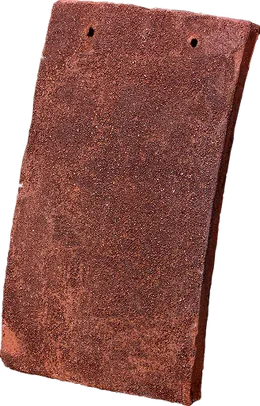 Handmade plain tilesThe classic nibbed clay tile, 265 × 165 mm, with a deep double camber.
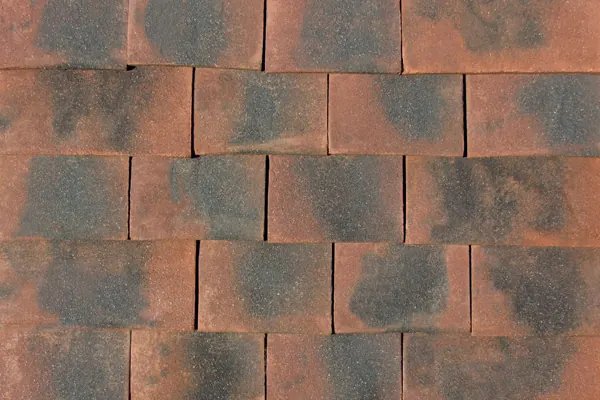 Clay roof tile coloursThirteen handmade colours, from Sussex Red to English Dark Oak.
See the tiles before you choose
We deliver samples by hand wherever we can, and you are welcome at the factory in Lydd by appointment.